Laptop Wi-Fi said to nuke sperm, but caveats abound(Reuters Health) - The digital age has left men's nether parts in a squeeze, if you believe the latest science on semen, laptops and wireless connections.
In a report in the venerable medical journal Fertility and Sterility, Argentinian scientists describe how they got semen samples from 29 healthy men, placed a few drops under a laptop connected to the Internet via Wi-Fi and then hit download.
Four hours later, the semen was, eh, well-done.
A quarter of the sperm were no longer swimming around, for instance, compared to just 14 percent from semen samples stored at the same temperature away from the computer.
And nine percent of the sperm showed DNA damage, three-fold more than the comparison samples.
The culprit? Electromagnetic radiation generated during wireless communication, say Conrado Avendano of Nascentis Medicina Reproductiva in Cordoba and colleagues...[Full Article]
Labels: laptop, sterility, sterilization, WiFi
Bisphenol-A now linked to male infertilityA controversial chemical used for decades in the mass production of food containers and baby bottles has been linked to male infertility for the first time.Bisphenol-A (BPA), known as the "gender bending" chemical because of its connection to male impotence, has now been shown to decrease sperm mobility and quality.
The findings are likely to increase pressure on governments around the world to follow Canada and ban the substance from our shelves.
BPA is used widely to make plastic harder and watertight tin cans.
It is found in most food and drink cans – including tins of infant formula milk – plastic food containers, and the casings of mobile phones, and other electronic goods.
It is also used in baby bottles though this is slowly being phased out.
BPA has been the subject of intense research as it is a known endocrine disrupter which in large quantities interferes with the release of hormones.
Earlier studies have linked it to low sex drive, impotence and DNA damage in sperm.
Now a new five year study claims to have found a link between levels of BPA in the blood and male fertility.
For their study of 514 workers in factories in China, researchers at Kaiser Permanente, a California-based research centre, found that men with higher urine BPA levels were two to four times more at risk of having poor semen quality, including low sperm concentration, low sperm vitality and mobility.
What is more the amount of the BPA in the blood seemed to be inversely proportional to sperm quality.
Even those with less than the national average BPA levels in America were effected, it was claimed.
"Compared with men without detectable urine BPA, those with detectable urine BPA had more than three times the risk of lowered sperm concentration and lower sperm vitality, more than four times the risk of a lower sperm count, and more than twice the risk of lower sperm motility," said study lead author Dr De-Kun Li...
[
Full Article]
Labels: Bisphenol A, BPA, eugenics, fertility, sterility, sterilization
Conclusive: Global Distribution of Rockefeller-Funded Anti-Fertility Vaccine Coordinated by WHO Jurriaan Maessen
Infowars.com
August 27, 2010
In addition to the recent PrisonPlanet-exclusive Rockefeller Foundation Developed Vaccines For “Mass-Scale” Fertility Reduction — which outlines the Rockefeller Foundation’s efforts in the 1960s funding research into so-called “anti-fertility vaccines”– another series of documents has surfaced, proving beyond any doubt that the UN Population Fund, World Bank and World Health Organization picked up on it, further developing it under responsibility of a “Task Force on Vaccines for Fertility Regulation”.
 |
|
|  |
|
|
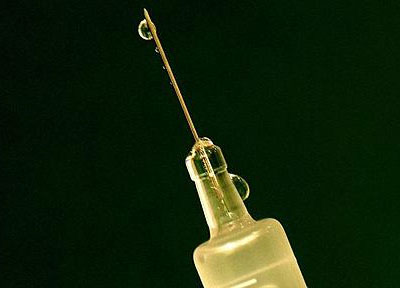
| WHO and the Rockefeller Foundation have worked together on “anti-fertility” vaccine since the 1960s. |
|
|
Just four years after the Rockefeller Foundation launched massive funding-operations into anti-fertility vaccines, the Task Force was created under auspices of the World Health Organization, World Bank and UN Population Fund. Its mission, according to one of its members, to support:
“basic and clinical research on the development of birth control vaccines directed against the gametes or the preimplantation embryo. These studies have involved the use of advanced procedures in peptide chemistry, hybridoma technology and molecular genetics as well as the evaluation of a number of novel approaches in general vaccinology. As a result of this international, collaborative effort, a prototype anti-HCG vaccine is now undergoing clinical testing, raising the prospect that a totally new family planning method may be available before the end of the current decade.”
In regards to the scope of the Task Force’s jurisdiction, the Biotechnology and Development Monitor reported:
“The Task Force acts as a global coordinating body for anti-fertility vaccine R&D in the various working groups and supports research on different approaches, such as anti-sperm and anti-ovum vaccines and vaccines designed to neutralize the biological functions of hCG. The Task Force has succeeded in developing a prototype of an anti-hCG-vaccine.”
One of the Task Force members, P.D. Griffin, outlined the purpose and trajectory of these Fertility Regulating Vaccines. Griffin:
“The Task Force has continued to coordinate its research activities with other vaccine development programmes within WHO and with other international and national programmes engaged in the development of fertility regulating vaccines.”
Griffin also admitted to the fact that one of the purposes of the vaccines is the implementation in developing countries. Griffin:
“If vaccines could be developed which could safely and effectively inhibit fertility, without producing unacceptable side effects, they would be an attractive addition to the present armamentarium of fertility regulating methods and would be likely to have a significant impact on family planning programmes.”
Also, one of the advantages of the FRVs over “currently available methods of fertility regulation” the Task Force states, is the following (179):
“low manufacturing cost and ease of delivery within existing health services.”
Already in 1978, the WHO’s Task Force (then called Task Force on Immunological Methods for Fertility Regulation) underlined the usefulness of these vaccines in regards to the possibility of “large scale synthesis and manufacture” of the vaccine:
“The potential advantages of an immunological approach to fertility regulation can be summarized as follows: (a) the possibility of infrequent administration, possibly by paramedical personnel; (b) the use of antigens or antigen fragments, which are not pharmacologically active; and (c) in the case of antigens of known chemical structure, there is the possibility of large-scale synthesis and manufacture of vaccine at relatively low cost.”
In 1976, the WHO Expanded Programme of Research, Development and Research Training in Human Reproduction published a report, stating:
“In 1972 the Organization (…) expanded its programme of research in human reproduction to provide an international focus for an intensified effort to improve existing methods of fertility regulation, to develop new methods and to assist national authorities in devising the best ways of providing them on a continuing basis. The programme is closely integrated with other WHO research on the delivery of family planning care by health services, which in turn feeds into WHO’s technical assistance programme to governments at the service level.”
Although the term “Anti-Fertility Vaccine”, coined by the Rockefeller Foundation, was replaced by the more bureaucratic sounding “Fertility Regulating Vaccine (FRV), the programme was obviously the same. Besides, The time line shows conclusively that the WHO, UN Population Fund and World Bank continued on a path outlined by the Rockefellers in the late 1960s. By extensions, it proves that all these organization are perfectly interlocked, best captured under the header “Scientific Dictatorship”. The relationshipbetween the WHO and the Rockefeller Foundation is intense. In the 1986 bulletin of the World Health Organization, this relationship is being described in some detail. While researching the effectiveness of “gossypol” as an “antifertility agent”, the bulletin states:
“The Rockefeller Foundation has supported limited clinical trials in China and smallscale clinical studies in Brazil and Austria. The dose administered in the current Chinese trial has been reduced from 20 mg to 10-15 mg/day during the loading phase in order to see if severe oligospermia rather than consistent azoospermia would be adequate for an acceptable, non-toxic and reversible effect. Meanwhile, both the WHO human reproduction programme and the Rockefeller Foundation are supporting animal studies to better define the mechanism of action of gossypol.”
In August of 1992, a series of meetings was held in Geneva, Switzerland, regarding “fertility regulating vaccines”. According to the document Fertility Regulating Vaccines (classified by the WHO with a limited distribution) present at those meetings were scientists and clinicians from all over the globe, including then biomedical researcher of the American Agency for International development, and current research-chief of USAID, Mr. Jeff Spieler.
In 1986 Mr. Spieler declared:
“A new approach to fertility regulation is the development of vaccines directed against human substances required for reproduction. Potential candidates for immunological interference include reproductive hormones, ovum and sperm antigens, and antigens derived from embryonic or fetal tissue.(…). An antifertility vaccine must be capable of safely and effectively inhibiting a human substance, which would need somehow to be rendered antigenic. A fertility-regulating vaccine, moreover, would have to produce and sustain effective immunity in at least 95% of the vaccinated population, a level of protection rarely achieved even with the most successful viral and bacterial vaccines. But while these challenges looked insuperable just a few years ago, recent advances in biotechnology- particularly in the fields of molecular biology, genetic engineering and monoclonal antibody production- are bringing antifertility vaccines into the realm of the feasible.”
“Vaccines interfering with sperm function and fertilization could be available for human testing by the early 1990s”, Spieler wrote.
In order for widespread use of these vaccines, Spieler writes, the vaccine must conquer “variations in individual responses to immunization with fertility-regulating vaccines”.
“Research”, he goes on to say,”is also needed in the field of “basic vaccinology”, to find the best carrier proteins, adjuvants, vehicles and delivery systems.”
In the 1992 document, the problem of “variations in individual responses” is also discussed:
“Because of the genetic diversity of human populations”, states the document, “immune responses to vaccines often show marked differences from one individual to another in terms of magnitude and duration. These differences may be partly or even completely overcome with appropriately engineered FRVs (Fertility Regulating Vaccines) and by improvements in our understanding of what is required to develop and control the immune response elicited by different vaccines.”
The picture emerging from these facts is clear. The WHO, as a global coordinating body, has since the early 70s continued the development of the Rockefeller-funded “anti-fertility vaccine”. What also is becoming clear, is that extensive research has been done to the delivery systems in which these anti-fertility components can be buried, such as regular anti-viral vaccines. It’s a mass-scale anti-fertilization programme with the aim of reducing the world’s population: a dream long cherished by the global elite...
[
Full Article]
Labels: depopulation, fertility, population control, Rockefeller, Rockefeller Foundation, sterility, sterilization, vaccination, vaccine
Water CAN Make You Fat: How Chemicals In Drink Can Trigger Weight Gain And Fertility ProblemsCan water make you fat? It sounds absurd, the kind of suggestion peddled by some New Age psycho-babble diet.
After all, can there be anything in our diet that equals the critically important role played by water in maintaining our health?
Water is the foundation of life, the major content of most organisms, the primary component of our cells and is responsible for aiding thousands of chemical processes in the body.
What is more, there is surely nothing more refreshing than a long, cool, sparklingly clear glass of water poured straight from the tap?
As a doctor of more than 20 years' standing, the answer has to be a resounding no.
Yet when we do drink it, how many of us get the healthy water we deserve?
Thanks to the possible pollutants that are so difficult to remove from our water supply, it has been linked to a number of health complaints - and yes, it may even trigger weight gain...
Read more:
http://www.dailymail.co.uk/health/article-1261203/How-water-CAN-make-fat-chemicals-drink-trigger-weight-gain-fertility-problems.html#ixzz0lBvEXAkeLabels: contamination, infertility, sterility, water


