Tuesday, April 5, 2011
MIAMI (CBS4) — When a couple has trouble getting pregnant, they often assume it’s because there’s a problem with the woman but that’s not always the case. The leading cause of male infertility is low sperm count and researchers have found sperm counts on the decline.
Dave and Teri have been trying to get pregnant since they married five years ago. They both assumed the problem was hers.
“It never crossed my mind that I was infertile or would have a problem with fertility,” said Dave.
Male fertility specialist Dr. Paul Turek said men did not think about their fertility. He says guys are like cars. “Men are engines that run hard almost all the time. And you can poison the engine. Not poison it but give it diluted fuel, water it down, get it out of tune somehow.”
Diluting the fuel is not something most men like to think about. However, according to studies in Europe and the United States, sperm counts and sperm quality have been dropping for the past 50 years. Guys typically have no idea how the environment or their own lifestyle can affect fertility.
“You know you can bring a sperm count to zero by taking hot baths every other day for a month,” Turek said. “It’ll take you three months to recover. It’ll go to zero.” That’s only the beginning of his list of sperm killers. “Smoking, nicotine, tobacco, other recreational drugs are bad,” Turek said.
Turek also said excess alcohol and hair loss medications can affect sperm count, along with illnesses, opiates and stress.
Do you keep a cell phone in your pocket? Use a laptop computer on your lap? Both can possibly raise testicular temperatures enough to hurt sperm production. Some pesticides mimic hormones that disrupt sperm growth and quality. And for the first time, studies show sperm can be affected by Bisphenol-A, a chemical contained in many plastic products.
Dave and Teri are among more than 8 million couples in the U.S. with fertility problems. Nearly half the time the problem is partially or totally on the male side.
“I’ve been on male birth control for 5 years and didn’t know it,” said Dave.
Around the time of his marriage, Dave complained of low energy to his doctor, who prescribed testosterone treatments. Testosterone and other steroids can cause sterility.
“Having a family, which I do consider part of my identity, I think we’re stuck right now,” he said. “And that, that makes me angry.”
Anger, disbelief, devastation; infertility is a diagnosis men don’t expect.
“These are things that a death in the family would induce, or losing a limb, or getting told you have cancer,” Turek said. “These are the same emotional impact. And they just never thought about it. It came from the blue sky, so it knocks ‘em out.”
Turek said male infertility is often curable. His advice to men — although he said most probably won’t listen — is to treat your body as well as you treat your car. He says while women get check-ups, men should get regular tune-ups.
“The body wants to work really hard, it wants to be the best it can and you can hurt that. Take better care of yourself.”
[Webmaster - If you get a chance, watch the 2006 movie "Children of Men". It is set in the year 2027 and there is widespread infertility...human beings can no longer procreate. It is a very interesting (and disturbing) movie with a definite predictive programming message. The movie is based on the novel 1992 novel "The Children of Men" by P.D. James. See the Google books version embedded below.]
"The Children of Men" by P.D. James
Labels: fertility, infertility, population


Friday, October 29, 2010
A controversial chemical used for decades in the mass production of food containers and baby bottles has been linked to male infertility for the first time.
Bisphenol-A (BPA), known as the "gender bending" chemical because of its connection to male impotence, has now been shown to decrease sperm mobility and quality.
The findings are likely to increase pressure on governments around the world to follow Canada and ban the substance from our shelves.
BPA is used widely to make plastic harder and watertight tin cans.
It is found in most food and drink cans – including tins of infant formula milk – plastic food containers, and the casings of mobile phones, and other electronic goods.
It is also used in baby bottles though this is slowly being phased out.
BPA has been the subject of intense research as it is a known endocrine disrupter which in large quantities interferes with the release of hormones.
Earlier studies have linked it to low sex drive, impotence and DNA damage in sperm.
Now a new five year study claims to have found a link between levels of BPA in the blood and male fertility.
For their study of 514 workers in factories in China, researchers at Kaiser Permanente, a California-based research centre, found that men with higher urine BPA levels were two to four times more at risk of having poor semen quality, including low sperm concentration, low sperm vitality and mobility.
What is more the amount of the BPA in the blood seemed to be inversely proportional to sperm quality.
Even those with less than the national average BPA levels in America were effected, it was claimed.
"Compared with men without detectable urine BPA, those with detectable urine BPA had more than three times the risk of lowered sperm concentration and lower sperm vitality, more than four times the risk of a lower sperm count, and more than twice the risk of lower sperm motility," said study lead author Dr De-Kun Li...
[Full Article]
Labels: Bisphenol A, BPA, eugenics, fertility, sterility, sterilization
Friday, August 27, 2010
Jurriaan Maessen
Infowars.com
August 27, 2010
In addition to the recent PrisonPlanet-exclusive Rockefeller Foundation Developed Vaccines For “Mass-Scale” Fertility Reduction — which outlines the Rockefeller Foundation’s efforts in the 1960s funding research into so-called “anti-fertility vaccines”– another series of documents has surfaced, proving beyond any doubt that the UN Population Fund, World Bank and World Health Organization picked up on it, further developing it under responsibility of a “Task Force on Vaccines for Fertility Regulation”.
 | |
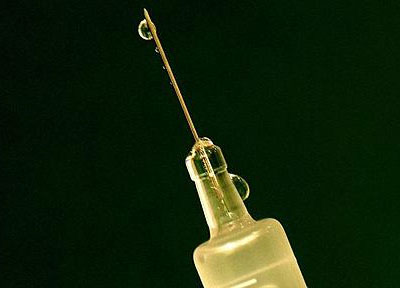 | |
| WHO and the Rockefeller Foundation have worked together on “anti-fertility” vaccine since the 1960s. | |
Just four years after the Rockefeller Foundation launched massive funding-operations into anti-fertility vaccines, the Task Force was created under auspices of the World Health Organization, World Bank and UN Population Fund. Its mission, according to one of its members, to support:
“basic and clinical research on the development of birth control vaccines directed against the gametes or the preimplantation embryo. These studies have involved the use of advanced procedures in peptide chemistry, hybridoma technology and molecular genetics as well as the evaluation of a number of novel approaches in general vaccinology. As a result of this international, collaborative effort, a prototype anti-HCG vaccine is now undergoing clinical testing, raising the prospect that a totally new family planning method may be available before the end of the current decade.”
In regards to the scope of the Task Force’s jurisdiction, the Biotechnology and Development Monitor reported:
“The Task Force acts as a global coordinating body for anti-fertility vaccine R&D in the various working groups and supports research on different approaches, such as anti-sperm and anti-ovum vaccines and vaccines designed to neutralize the biological functions of hCG. The Task Force has succeeded in developing a prototype of an anti-hCG-vaccine.”
One of the Task Force members, P.D. Griffin, outlined the purpose and trajectory of these Fertility Regulating Vaccines. Griffin:
“The Task Force has continued to coordinate its research activities with other vaccine development programmes within WHO and with other international and national programmes engaged in the development of fertility regulating vaccines.”
Griffin also admitted to the fact that one of the purposes of the vaccines is the implementation in developing countries. Griffin:
“If vaccines could be developed which could safely and effectively inhibit fertility, without producing unacceptable side effects, they would be an attractive addition to the present armamentarium of fertility regulating methods and would be likely to have a significant impact on family planning programmes.”
Also, one of the advantages of the FRVs over “currently available methods of fertility regulation” the Task Force states, is the following (179):
“low manufacturing cost and ease of delivery within existing health services.”
Already in 1978, the WHO’s Task Force (then called Task Force on Immunological Methods for Fertility Regulation) underlined the usefulness of these vaccines in regards to the possibility of “large scale synthesis and manufacture” of the vaccine:
“The potential advantages of an immunological approach to fertility regulation can be summarized as follows: (a) the possibility of infrequent administration, possibly by paramedical personnel; (b) the use of antigens or antigen fragments, which are not pharmacologically active; and (c) in the case of antigens of known chemical structure, there is the possibility of large-scale synthesis and manufacture of vaccine at relatively low cost.”
In 1976, the WHO Expanded Programme of Research, Development and Research Training in Human Reproduction published a report, stating:
“In 1972 the Organization (…) expanded its programme of research in human reproduction to provide an international focus for an intensified effort to improve existing methods of fertility regulation, to develop new methods and to assist national authorities in devising the best ways of providing them on a continuing basis. The programme is closely integrated with other WHO research on the delivery of family planning care by health services, which in turn feeds into WHO’s technical assistance programme to governments at the service level.”
Although the term “Anti-Fertility Vaccine”, coined by the Rockefeller Foundation, was replaced by the more bureaucratic sounding “Fertility Regulating Vaccine (FRV), the programme was obviously the same. Besides, The time line shows conclusively that the WHO, UN Population Fund and World Bank continued on a path outlined by the Rockefellers in the late 1960s. By extensions, it proves that all these organization are perfectly interlocked, best captured under the header “Scientific Dictatorship”. The relationshipbetween the WHO and the Rockefeller Foundation is intense. In the 1986 bulletin of the World Health Organization, this relationship is being described in some detail. While researching the effectiveness of “gossypol” as an “antifertility agent”, the bulletin states:
“The Rockefeller Foundation has supported limited clinical trials in China and smallscale clinical studies in Brazil and Austria. The dose administered in the current Chinese trial has been reduced from 20 mg to 10-15 mg/day during the loading phase in order to see if severe oligospermia rather than consistent azoospermia would be adequate for an acceptable, non-toxic and reversible effect. Meanwhile, both the WHO human reproduction programme and the Rockefeller Foundation are supporting animal studies to better define the mechanism of action of gossypol.”
In August of 1992, a series of meetings was held in Geneva, Switzerland, regarding “fertility regulating vaccines”. According to the document Fertility Regulating Vaccines (classified by the WHO with a limited distribution) present at those meetings were scientists and clinicians from all over the globe, including then biomedical researcher of the American Agency for International development, and current research-chief of USAID, Mr. Jeff Spieler.
In 1986 Mr. Spieler declared:
“A new approach to fertility regulation is the development of vaccines directed against human substances required for reproduction. Potential candidates for immunological interference include reproductive hormones, ovum and sperm antigens, and antigens derived from embryonic or fetal tissue.(…). An antifertility vaccine must be capable of safely and effectively inhibiting a human substance, which would need somehow to be rendered antigenic. A fertility-regulating vaccine, moreover, would have to produce and sustain effective immunity in at least 95% of the vaccinated population, a level of protection rarely achieved even with the most successful viral and bacterial vaccines. But while these challenges looked insuperable just a few years ago, recent advances in biotechnology- particularly in the fields of molecular biology, genetic engineering and monoclonal antibody production- are bringing antifertility vaccines into the realm of the feasible.”
“Vaccines interfering with sperm function and fertilization could be available for human testing by the early 1990s”, Spieler wrote.
In order for widespread use of these vaccines, Spieler writes, the vaccine must conquer “variations in individual responses to immunization with fertility-regulating vaccines”.
“Research”, he goes on to say,”is also needed in the field of “basic vaccinology”, to find the best carrier proteins, adjuvants, vehicles and delivery systems.”
In the 1992 document, the problem of “variations in individual responses” is also discussed:
“Because of the genetic diversity of human populations”, states the document, “immune responses to vaccines often show marked differences from one individual to another in terms of magnitude and duration. These differences may be partly or even completely overcome with appropriately engineered FRVs (Fertility Regulating Vaccines) and by improvements in our understanding of what is required to develop and control the immune response elicited by different vaccines.”
The picture emerging from these facts is clear. The WHO, as a global coordinating body, has since the early 70s continued the development of the Rockefeller-funded “anti-fertility vaccine”. What also is becoming clear, is that extensive research has been done to the delivery systems in which these anti-fertility components can be buried, such as regular anti-viral vaccines. It’s a mass-scale anti-fertilization programme with the aim of reducing the world’s population: a dream long cherished by the global elite...
[Full Article]Labels: depopulation, fertility, population control, Rockefeller, Rockefeller Foundation, sterility, sterilization, vaccination, vaccine
Thursday, August 5, 2010
Jurriaan Maessen
Prison Planet.com
Thursday, August 5, 2010
In its 1968 yearly report, the Rockefeller Foundation acknowledged funding the development of so-called “anti-fertility vaccines” and their implementation on a mass-scale. From page 51 onward we read:
“(…) several types of drugs are known to diminish male fertility, but those that have been tested have serious problems of toxicity. Very little work is in progress on immunological methods, such as vaccines, to reduce fertility, and much more research is required if a solution is to be found here.”
The possibility of using vaccines to reduce male fertility was something that needed to be investigated further, according to the Rockefeller Foundation, because both the oral pill and the IUD were not suitable for mass-scale distribution:
“We are faced with the danger that within a few years these two “modern” methods, for which such high hopes have been held, will in fact turn out to be impracticable on a mass scale.”
The possibility of administrating hormone preparations to reduce fertility was also mentioned, although- states the report- they have been known to “cause bleeding problems, which may limit their usefulness.”
“A semipermanent or renewable subcutaneous implant of these hormones has been suggested, but whether or not the same difficulties would result has not been determined.”
Saying that research thus-far had been too low-grade to produce any substantial results, the report was adamant:
“The Foundation will endeavour to assist in filling this important gap in several ways:
1- “Seeking out or encouraging the development of, and providing partial support to, a few centres of excellence in universities and research institutions in the United States and abroad in which the methods and points of view of molecular biology are teamed with the more traditional approaches of histology, embryology,and endocrinology in research pertinent to development of fertility control methods;”
2- “Supporting research of individual investigators, oriented toward development of contraceptive methods or of basic information on human reproduction relevant to such developments;”
3- “Encouraging, by making research funds available, as well as by other means, established and beginning investigators to turn their attention to aspects of research in reproductive biology that have implications for human fertility and its control;”
4- “Encouraging more biology and biochemistry students to elect careers in reproductive biology and human fertility control, through support of research and teaching programs in departments of zoology, biology, and biochemistry.”
The list goes on and on. Motivation for these activities, according to the RF?
“There are an estimated five million women among America’s poverty and near-poverty groups who need birth control service (…). The unchecked fertility of the indigent does much to perpetuate poverty, undereducation, and underemployment, not only in urban slums, but also in depressed rural areas.”
It wasn’t long before all the Foundation’s efforts began to have effect. In its annual report of 1988, The RF was happy to report the progress made by the Foundation’s Population Division in the field of anti-fertility vaccines:
“India’s National Institute of Immunology successfully completed in 1988 the first phase of trials with three versions of an anti-fertility vaccine for women. Sponsored by the government of India and supported by the Foundation, the trials established that with each of the tested vaccines, at least one year of protection against pregnancy could be expected, based on the levels of antibodies formed in response to the immunization schedule.”
In its 1997 review of anti-fertility vaccines, Indian based International Centre for Genetic Engineering and Biotechnology didn’t forget to acknowledge its main benefactor:
“The work on LHRH and HCG vaccines was supported by research grants of The Rockefeller Foundation, (…).”
In the 1990s the work on anti-fertility vaccines went in overdrive, especially in third-world nations, as did the funding provided by the deep pockets of the Rockefeller Foundation. At the same time, the target-population of the globalists- women- began to stir uncomfortably with all this out-in-the-open talk of population reduction and vaccines as a means to achieve it.
Betsy Hartman, Director of the Population and Development Program at Hampshire College, Massachusetts and “someone who believes strongly in women’s right to safe, voluntary birth control and abortion”, is no supporter of the anti-fertility vaccine, as brought into being by the Rockefeller Foundation. She explains in her essay Population control in the new world order:
“Although one vaccine has been tested on only 180 women in India, it is being billed there as ’safe, devoid of any side effects and completely reversible’. The scientific community knows very well that such assertions are false – for instance, many questions still remain about the vaccine’s long-term impact on the immune system and menstrual cycle. There is also evidence on film of women being denied information about the vaccine in clinical trials. Nevertheless, the vaccine is being prepared for large-scale use.”
The Women’s Global Network for Reproductive Rights based in Amsterdam, the Netherlands, quoted “a leading contraceptive researcher as saying:
“Immunological birth control methods will be an ‘antigenic weapon’ against the reproductive process, which left unchecked, threatens to swamp the world.”
Animal rights activist ms. Sonya Ghosh also expressed concerns about the Rockefeller-funded anti-fertility vaccine and its implementation:
“Instead of giving individual women more options to prevent pregnancy and protect against AIDs and sexually transmitted diseases, the anti fertility vaccine is designed to be easily administered to large numbers of women using the least resources. If administered to illiterate populations the issues of user control and informed consent are further cause for concern.”
To avoid such debates, the Foundation has in the last couple of decades consorted to its long-practised and highly successful methods of either outright lying through its teeth or using deceptive language to hide the fact that it continues to work tirelessly toward its long-stated mission. If you think the RF and others have abandoned their anti-fertility efforts with the help of vaccines, think again or read this article.
Labels: fertility, Rockefeller Foundation
A ‘gender bending’ chemical in food and drinks containers could be behind rising male infertility, scientists say.
Men with high levels of Bisphenol A (BPA) in their bodies are more likely to have low sperm counts, according to a study.
BPA is widely used to harden plastics and is found in baby bottles, CD cases, plastic knives and forks and the lining of food and drink cans.
The chemical mimics the female sex hormone oestrogen and interferes with the way hormones are processed by the body.
Although some animal studies have shown it is safe, others have linked it to breast cancer, liver damage, obesity, diabetes and fertility problems.
Experts estimate BPA is detectable in more than 90 per cent of people...
[Full Article]Labels: Bisphenol A, BPA, fertility
Friday, May 28, 2010
South Korea's Constitutional Court has ruled that human embryos left over from fertility treatment are not life forms and can be used for research or destroyed, a court spokesman said Friday.
In its ruling Thursday the court upheld an existing law allowing the use of leftover embryos for research. The law also allows fertility clinics to dispose of frozen embryos five years after fertilisation treatment is completed...
Tuesday, May 18, 2010
Couples will stop having sex to conceive babies within a decade and use IVF instead, scientists said yesterday.
They say 30-somethings will increasingly rely on artificial methods of fertilisation because natural human reproduction is 'fairly inefficient'.
It means that in future, sex will be nothing more than a leisure activity - the latest blow to the Christian idea that the role of sex is to produce children.
If the experts are right, it means the sci-fi world of books such as Brave New World, in which all children are born in 'hatcheries', could soon be closer to reality...
Labels: Brave New World, fertility, IVF

Subscribe to Posts [Atom]