Tuesday, November 29, 2011
(Reuters Health) - The digital age has left men's nether parts in a squeeze, if you believe the latest science on semen, laptops and wireless connections.
In a report in the venerable medical journal Fertility and Sterility, Argentinian scientists describe how they got semen samples from 29 healthy men, placed a few drops under a laptop connected to the Internet via Wi-Fi and then hit download.
Four hours later, the semen was, eh, well-done.
A quarter of the sperm were no longer swimming around, for instance, compared to just 14 percent from semen samples stored at the same temperature away from the computer.
And nine percent of the sperm showed DNA damage, three-fold more than the comparison samples.
The culprit? Electromagnetic radiation generated during wireless communication, say Conrado Avendano of Nascentis Medicina Reproductiva in Cordoba and colleagues...[Full Article]
Labels: laptop, sterility, sterilization, WiFi


Wednesday, October 13, 2010
13WMAZ
PHILADELPHIA (AP) -- A Philadelphia-area school district will pay $610,000 to settle two lawsuits over secret photos taken on school-issued laptops.
The Lower Merion School District admits it captured thousands of webcam photographs and screen shots from student laptops in a misguided effort to locate missing computers.
Harriton High School student Blake Robbins says the district photographed him 400 times in a two-week period, sometimes as he slept in his bedroom.
District officials voted Monday to pay Robbins $175,000, a second student $10,000 and their lawyer, Mark Haltzman, $425,000.
The district's insurer will pay $1.2 million toward legal and settlement costs.
The FBI investigated but declined to bring a criminal wiretap case.
Labels: laptop, lawsuit, Pennsylvania, Philadelphia, spying
Thursday, August 19, 2010
The federal prosecutor investigating the case of a Pennsylvania school district that spied on its students via remote-controlled laptop cameras says the school district won't face criminal charges in the case.
US Attorney Zane David Memenger said in a statement that there is no evidence the Lower Merion School District, in suburban Philadelphia, had any criminal intent when it remotely activated cameras on laptops issued to students.
"For the government to prosecute a criminal case, it must prove beyond a reasonable doubt that the person charged acted with criminal intent," Memeger said, as quoted at Information Week. "We have not found evidence that would establish beyond a reasonable doubt that anyone involved had criminal intent."
The issue came to light in February, when the parents of Harriton High School student Blake Robbins filed a class-action lawsuit alleging the school district invaded Robbins' privacy by filming him in his home through his school-issued laptop. It emerged later that the school district photographed Robbins 400 times in a two-week period, in various states of undress and even during his sleep.
Investigators found that the remote-controlled cameras took some 56,000 pictures of Lower Merion School District students over a two-year period, with the cameras sometimes left on for weeks at a time...
[Full Article]
Labels: cameras, education, laptop, Pennsylvania, Philadelphia, privacy, school, spying
Wednesday, July 14, 2010
TAMPA, Fla. – Thousands of laptops have been stolen from the Florida office of a private contractor for the U.S. military's Special Operations Command.
Surveillance cameras caught up to seven people loading the computers into two trucks for nine hours.
U.S. Special Operations Command coordinates the activities of elite units from the Army, Navy, Air Force and Marines. A spokeswoman said Tuesday that none of the stolen laptops contained military information or software.
The Virginia-based company iGov was awarded a $450 million contract earlier this year to supply mobile technology services linking special operations troops worldwide. A company executive says iGov is cooperating with authorities and the March 6 break-in at its Tampa facility remains under investigation.
Labels: break-in, iGov, laptop, Special Operations Command
Saturday, May 15, 2010
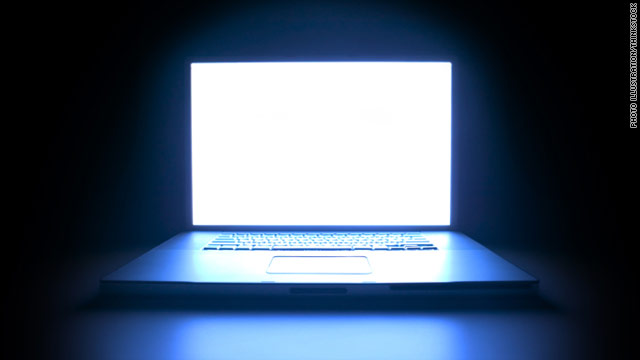
The sleep-deprived Oakland, California, resident had read that strong light -- whether it's beaming down from the sun or up from the screens of personal electronics -- can reset a person's internal sleep clock.
So, for one month, whenever the sun set, he turned off all the gadgets and lights in his house -- from the bulb hidden in his refrigerator to his laptop computer.
It worked. Instead of falling asleep at midnight, Moyer's head was hitting the pillow as early as 9 p.m. He felt so well-rested during the test, he said, that friends remarked on his unexpected morning perkiness.
"I had the experience, a number of times, just feeling kind of unreasonably happy for no reason. And it was the sleep," he said. "Sure, you can get by with six or seven hours, but sleeping eight or nine hours -- it's a different state of mind."
Moyer may be onto something.
More than ever, consumer electronics -- particularly laptops, smartphones and Apple's new iPad -- are shining bright light into our eyes until just moments before we doze off.
Now there's growing concern that these glowing gadgets may actually fool our brains into thinking it's daytime. Exposure can disturb sleep patterns and exacerbate insomnia, some sleep researchers said in interviews...
Labels: computers, laptop, sleep disorder
Friday, April 16, 2010
The system that Lower Merion school officials used to track lost and stolen laptops wound up secretly capturing thousands of images, including photographs of students in their homes, Web sites they visited, and excerpts of their online chats, says a new motion filed in a suit against the district.
More than once, the motion asserts, the camera on Robbins' school-issued laptop took photos of Robbins as he slept in his bed. Each time, it fired the images off to network servers at the school district.
Back at district offices, the Robbins motion says, employees with access to the images marveled at the tracking software. It was like a window into "a little LMSD soap opera," a staffer is quoted as saying in an e-mail to Carol Cafiero, the administrator running the program.
"I know, I love it," she is quoted as having replied...
Labels: big brother, laptop, privacy, school, surveillance

Subscribe to Posts [Atom]