Saturday, November 12, 2011
Your Most Expensive Thanksgiving Meal: Food Costs Soar, Highest Jump in 20 Years
 |
| The Thanksgiving dinner cost chart since 1986 - Source |
Anthony Gucciardi
Activist PostThanksgiving is a time for families to come together and celebrate, but this year may be your most expensive Thanksgiving yet thanks to skyrocketing food costs and an overall increased demand for poultry. It now costs, on average, $49.20 to feed 10 individuals on Thanksgiving. Up $5.73 from last year according to the
American Farm Bureau Federation, the cost is about 22 percent more expensive than it was last year.
Last year, a 16-pound Thanksgiving turkey was priced at $17.70. This year, the same bird costs an average of $21.60. The price rise signifies the highest jump in 20 years...[
Full Article]
Labels: costs, food prices
Thursday, September 8, 2011
Smucker Raising Prices on Jif
Wall Street JournalNEW YORK—J.M. Smucker Co. is raising prices on Jif peanut butter products 30% starting in November due to a weak peanut crop that has sent costs higher, President and Chief Operating Officer Vince Byrd said Wednesday.
The company will also raise prices 4% on its namesake fruit spreads in November.
The sharp increase in peanut butter prices comes as Smucker finds itself facing yet another weak peanut crop.
"The 2011 crop is ... being challenged due to poor weather conditions," Mr. Byrd said at a Barclays Capital consumer conference. "Our peanut costs will be significantly higher."...[Full Article]
Labels: food prices, peanut butter, rising prices, Smucker
Friday, July 1, 2011
10 Reasons Why Lindsay Lohan Is Right About The Federal Reserve And The Price Of FoodEnd of the American Dream

Does Lindsay Lohan understand monetary policy better than Ben Bernanke does? The other day, her Twitter account sent out the following message: "Have you guys seen food and gas prices lately? U.S. $ will soon be worthless if the Fed keeps printing money!" Well, it turns out that it was a "sponsored tweet" that Lohan was paid to send out, but in a subsequent tweet Lohan explained that "i actually do care about gas and food prices, so whether it's an #ad or no, it's important for people to be aware of it." Okay, so we probably will not see Lohan at any "End the Fed" rallies, but it turns out that in her own bizarre way she has brought a little bit of attention to some very important issues. Food and gas prices are skyrocketing, and a lot of the blame for that can be placed on the shoulders of the Federal Reserve. (Read More.....)
Labels: End of the American Dream, Federal Reserve, food prices, gas prices, Lindsay Lohan
Saturday, June 25, 2011
Why Are Food Prices Rising So Fast?The Economic Collapse Blog
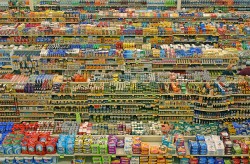
If you do much grocery shopping, you have probably noticed that the cost of food has been rising at a very brisk pace over the past year. So why are food prices rising so fast? According to Federal Reserve Chairman Ben Bernanke, inflation is still very low and the economy is improving. So what is going on here? When I go to the grocery store these days, there are very few things that I will buy unless they are on sale. In fact, I have noticed that many of the new "sale prices" are the old regular prices. Other items have had their packages reduced in size in order to hide the price increases. But with millions of American families just barely scraping by as it is, what is going to happen if food prices keep rising this rapidly? (Read More....)
Labels: food prices, The Economic Collapse Blog
Tuesday, May 31, 2011
Food prices set to double by 2030, aid group says
MSNBCLONDON — Food prices could double in the next 20 years and demand in 2050 will be 70 percent higher than now, U.K. charity Oxfam said on Tuesday, warning of worsening hunger as the global food economy stumbles close to breakdown...[
Full Article]
Labels: food prices
Tuesday, April 26, 2011
Say It Ain’t So, Joe: Coffee Prices Hit 34-Year HighCHICAGO (CBS) — That morning cup of coffee is going to cost you more.
Coffee prices are at a 34-year high — $3 a pound.
Yet coffee drinkers plan on grinding out the extra cash because they need that cup of Joe, CBS 2’s Pamela Jones reports.
“I like the taste of it. It keeps me up,” medical student Linda Russo says.
In countries like Ethiopia, people can’t do without it...[Full Article]
Labels: coffee, food prices
Friday, April 22, 2011
Killer Combo of High Gas, Food Prices at Key Tipping PointCNBCThe combination of rising gasoline prices and the steepest increase in the cost of food in a generation is threatening to push the US economy into a recession, according to Craig Johnson, president of Customer Growth Partners.
 |
Gas station in San Francisco.
|
Johnson looks at the percentage of income consumers are spending on gasoline and food as a way of gauging how consumers will fare when energy prices spike.
With gas prices now standing at about $3.90 a gallon, energy costs have now passed 6 percent of spending—a level that Johnson says is a "tipping point" for consumers.
"Energy is not quite as essential as food and water, but is a necessity in today's economy, and when gasoline costs more than bottled water—like now—then it takes a huge bite out of disposable spending," he said, in a research note...[Full Article]
Labels: food prices, gas prices
Thursday, April 21, 2011
McDonald's warns of higher food inflationReuters...McDonald's and other restaurant operators are getting squeezed by accelerating food costs and must figure out how to raise prices without scaring away already skittish diners.
"It's very hard to pass through price increase right now," said Stifel Nicolaus analyst Steve West.
McDonald's Chief Executive Jim Skinner said customers are getting "pinched everywhere. They should not suffer the same fate at McDonald's."
Chief Financial Officer Pete Bensen said the company would sacrifice some short-term margin to protect long-term growth. He added that McDonald's has experience finding the right recipe for price increases in fragile economic times.
McDonald's now expects food costs to rise between 4 percent and 4.5 percent in the United States and Europe this year. That is up from its prior call for a rise of 2 percent to 2.5 percent in the United States and an increase of 3.5 percent to 4.5 percent in Europe.
McDonald's in March put through a 1 percent menu price rise in the United States, where it plans additional increases. Prices in Europe are up by the same amount and the company plans to raise prices in China...[Full Article]
Labels: food prices, inflation, McDonald's
Sunday, April 17, 2011
World Bank: Food prices have entered the 'danger zone'
Food prices have entered the “danger zone”, threatening to condemn a generation to extreme poverty and malnutrition, the World Bank has warned. The Telegraph Robert Zoellick, World Bank president, said food prices are at “a tipping point”, having risen 36pc in the last year to levels close to their 2008 peak. The rising cost of food has been much more dramatic in low-income countries, pushing 44m people into poverty since June last year.
Another 10pc rise in food prices would push 10m into extreme poverty, defined as an effective income of less than $1.25 a day. Already, the world’s poor number 1.2bn...[Full Article]
Labels: food prices, World Bank
Friday, April 8, 2011
Food and gas prices on the riseFox 11 / WLUK-TVWhether it's at the pump or in checkout line at the grocery store, cost of living items are on the rise.
A survey by the Wisconsin Farm Bureau shows food prices are up 5 percent this year.
The bureau's 'Marketbasket' survey totals the cost of 16 food items. In the first three months of 2011, the total was $48. That is up $2.39 from December's price for the same items.
Topping the survey's list
- Apples increased 24 cents (18 percent) to $1.52 per pound.
- A gallon of whole milk increased 50 cents (17 percent) to $3.41 per gallon.
- One pound of bagged salad increased 33 cents (15 percent) to $2.48.
- A five-pound bag of flour increased 25 cents (12 percent) to $2.34.
- One pound of ground chuck climbed 32 cents (10 percent) to $3.41.
However the study shows Wisconsin's price is more than $1 less than the national survey of the same 16 food items.
Prices are rising at the gas pump as well.
According to AAA, the price for a gallon of regular grade gasoline in the Green Bay area is $3.767. That is up nearly 25 cents in the last month ($3.529) and about 90 cents form a year ago ($2.883) from this time last year. The highest recorded average price is $4.056 from July 2008...[Full Article]
Labels: food prices, gas prices
Thursday, March 17, 2011
Wholesale prices up 1.6 pct. on steep rise in foodWholesale prices rise 1.6 pct. due to biggest jump in food costs in more than 36 years WASHINGTON (AP) -- Wholesale prices jumped last month by the most in nearly two years due to higher energy costs and the steepest rise in food prices in 36 years. Excluding those volatile categories, inflation was tame...[
Full Article]
Labels: food prices
Thursday, March 3, 2011
UN: food prices hit record high in February
ROME (AP) - A U.N. food agency says that global food prices reached new highs in February and warns that oil price spikes could provoke further increases.
Skyrocketing food prices have been among the triggers for protests in Egypt, Tunisia and elsewhere and raised fears of a repeat of the food price crises in 2007 and 2008. Global oil prices have spiked on concerns about the potential impact of supply disruptions from Libya.
The Food and Agriculture Organization said in a statement Thursday that its food price index was up 2.2 percent last month, the highest in real and nominal terms since the agency started monitoring prices in 1990.
It was also the eighth consecutive month that food prices had risen. In January, the index had already registered a peak.
Labels: food prices, U.N., United Nations
Monday, February 28, 2011
Rising Food Prices - 02/28/2011
Food prices on the rise
Circumstances around the world conspire to up your billDelaware OnlineThose demonstrations in Egypt and devastating floods in Australia are more than just faraway flashes of trouble on the news sites.
They are events that are being felt already, and will continue to cause distress, in a supermarket and restaurant near you.
Whipped along by wild weather, political strife and even the trendy shift toward biofuels, food prices are rising at a rate capable of causing global shock, and look increasingly likely to push even higher through this already tumultuous year... [
Full Article]
Attention, shoppers! Food prices are rising.
Rising world demand and supply shortages will push up food prices 2 to 4 percent this year, maybe more.Christian Science MonitorEven if you never set foot in a supermarket, track commodity prices, or buy wheat futures, you probably have noticed this trend: Food prices are going up.
Nan Braun knows. Since Thanksgiving, "I've been paying at least another $50 a month more for food for the family," says the Kokomo, Ind., resident. She's responded by purchasing some foods in bulk when they're on sale – and buying flour for making bread.
Susan Unger-Grossman of New York City has noticed a change. The price of the box of single-serving coffee packets she often buys hasn't changed, but the number of packets per box has dropped from 24 to 18. "That means if you'd buy three boxes of the coffee, you'd be losing the equivalent of a whole box," she points out.
These changes are early hints of a much broader increase in food prices that should come later this year. The rise in commodity food and energy prices will boost costs at the grocery store this year anywhere from 2 to 4 percent – or possibly even higher, analysts forecast. That's not unprecedented. A rise of 2 to 3 percent in consumer food prices would mark a return "toward the historical average" food inflation rate, according to the US Department of Agriculture. It just feels huge because last year, consumers' price of food inched up only 0.8 percent – the lowest food inflation rate since 1962, according to the USDA.
Some foods will go up in price more than others. Shoppers can expect a rise of 2.5 to 3.5 percent for beef and 4.5 to 5.5 percent for dairy products, the USDA forecasts. But nonalcoholic beverages will post price increases of only 1 to 2 percent... [Full Article]
No Inflation? That's Not What Food Prices Are SayingCNBCWith all the talk about $4 a gallon gas and the crisis in the Middle East, the specter of surging food prices has gotten pushed to the background.
That’s a mistake, considering that the struggle to put food on the table is what generated the riots in the first place. In the US we focus so much on gas because of the way higher transportation costs infect every sector of the economy, but rising grocery costs are a major threat as well.
Of course, we live in the land of no inflation.
Core cost of living is cruising along in the 1 to 2 percent range, according to government calculations, indicating that we have nothing to worry about when it comes to inflation concerns.
One can only imagine that the economists who project these assertions don’t have to eat.
By any measure imaginable, food prices are climbing and climbing fast and it’s not only in developing countries where income can’t keep up with the rise in the cost of goods.
Here in the US, food is putting a big bite on household budgets. More than 12 percent of after-tax income is now being spent on fuel and food, with more than half that number on the latter... [Full Article]
Labels: food prices
Sunday, February 20, 2011
Rising food prices nearing danger point: World BankRaw StoryPARIS (AFP) – World Bank president Robert Zoellick warned leaders of the top global economies Saturday that the world is reaching a danger point where soaring food prices threaten further political instability.
"I mentioned that we are reaching a danger point," Zoellick said, adding that he had urged G20 finance ministers and central bank chiefs meeting here to "put food first in 2011."
Zoellick said rising prices would eventually result in increased food supplies but in the intervening couple of years, "there could be an awful lot of turmoil and governments could fall and societies could go into turmoil."...
[
Full Article]
Labels: food prices, World Bank
Monday, February 14, 2011
Produce prices skyrocket with freeze in Mexico, Southwest PORTLAND -- Get ready to pay double or even triple the price for fresh produce in the coming weeks after the worst freeze in 60 years damaged and wiped out entire crops in northern Mexico and the southwestern U.S.
The problem started less than a week ago, when our nation was focusing on the Superbowl and sheets of ice falling from Texas Stadium.
Farmers throughout northern Mexico and the Southwest experienced unprecedented crop losses. Now devastation that seemed so far away, is hitting us in the pocketbooks.
"We've had to double and triple some prices and consumers come in and it's quite a shock to them," said Rusty Peake, GM of Food4Less in Southeast Portland...
[
Full Article]
Labels: economy, food prices
Saturday, February 5, 2011
Food Prices and Global Instability Council on Forgeign Relations| Interviewee: | |
|---|
| Interviewer: | |
|---|
February 4, 2011

Food prices are skyrocketing across the world, and last month, they peaked to the highest levels since the UN's Food and Agriculture Organization began indexing them in 1990. In the Middle East, wheat prices are playing a role in the ongoing unrest, particularly in Egypt, the world's largest wheat importer. Laurie Garrett, CFR's senior fellow for global health, says the rising prices of staple grains in the region are adding to a "real sense of anger and injustice." She notes that though governments are attempting to hold prices down artificially, "very few governments can really get away with it because they just can't afford it." The food price crisis, she says, is "a destabilizing moment in terms of global governance" and to meet food demand going forward, the food production in the developing world must become more efficient and "every aspect of farming, harvesting, delivery, and distribution has to improve dramatically."...
[Full Article]
Labels: CFR, Council on Foreign Relations, food, food crisis, food prices, global instability

Subscribe to Posts [Atom]


