The Justice Department is defending the government's refusal to discuss—or even acknowledge the existence of—any cooperative research and development agreement between Google and the National Security Agency. The Washington based advocacy group Electronic Privacy Information Center sued in federal d...
The National Security Agency is on a hiring blitz. The cryptologic intelligence agency — home to the government's chief codemakers and breakers — announced its intention to hire as many as 3,000 people over the next two years, many of them cybersecurity experts.
In fact, NSA recruiters even took a trip to Las Vegas in the last few weeks to look for potential hires at DefCon, a high-profile hacker conference there.
Dickie George, the technical director of the Information Assurance Directorate at NSA, told the Federal Drive the agency is partnering with academia and industry to find the "best and brightest" in cybersecurity.
"We really need people who can solve hard problems," George said. "And network security is one of the hardest problems around."
However, the shortage of cyber pros doesn't only affect government, but also industry, he added.
"We need to develop the talent in this country to protect us from what's going on," he said. "And there's a lot going on." By joining forces with universities, he said, NSA and other government agencies hope to show a cyber career with the government can be an attractive option.
"There are great careers in this field," he said. "We want them to think about not being rocket scientists, but being cyber warriors, because that's what the country needs right now."
And the agency is looking in some unconventional places.
NSA raised some eyebrows when it was reported that the agency had visited the hacker convention, DefCon, in search of new cyber personnel.
"The community there is very vibrant; it's got a lot of talent," George explained. "Most of the people out there are doing the right things: They're trying to make products better, they're trying to improve the security of the Internet. And we need to work with those people ... We need to make sure they understand that we are the good guys."
But with many areas of the Defense Department preparing for flatter budgets and civilian hiring freezes already in the offing, NSA's robust hiring may be hard to account for.
But George characterized the current environment as a "cyber cold war," and said he's been given no indication to slow hiring.
"The importance of this mission and the importance to the nation of cybersecurity - it can't be understated," he said.
Today, the big value is intellectual property. "It's in the ideas," he added, in contrast to a bygone age where the value of industry was in large-scale manufacturing plants and material.
"This country is constantly being threatened by our adversaries," he said, which includes nation-states, terrorists and organized crime. "They're coming into this country and siphoning off our intellectual property. And that makes us really vulnerable."
Steve Watson & Paul Joseph Watson Prisonplanet.com July 25, 2011
The general counsel of the National Security Agency testified to a Senate hearing yesterday that he believes the agency has the authority to track Americans via cell phones.
“There are certain circumstances where that authority may exist,” said Matthew Olsen the current nominee to head up the National Counterterrorism Center.
Olsen made the comments to the Senate Select Committee on Intelligence as Sen. Ron Wyden (D., Ore.) repeatedly asked if the government has the authority to “use cell site data to track the location of Americans inside the country.”
Olsen added that the reason his answer was not definitive was that “it is a very complicated question”, assuring the committee that the NSA would provide more information in a future memo.
Sen. Wyden recently wrote (full letter below) to the Director of National Intelligence demanding to know whether the CIA and the NSA “have the authority to collect the geolocation information of American citizens for intelligence purposes.”
“If yes, please explain the specific statutory basis for this authority,” the letter, co signed by Sen. Mark Udall (D., Colo.) states.
The Senators also requested information on how many Americans have been monitored under authority granted by 2008 legislation amending the Foreign Intelligence Surveillance Act. “Have any apparently law-abiding Americans had their communications collected by the government?” the letter asks.
Two months ago Wyden expressed concern that the law relating to surveillance is unclear. “The law is being secretly interpreted by the executive branch” Wyden noted.
Along with Congressman Jason Chaffetz (R., Utah), Wyden has introduced a joint bill that would force any government agency to secure a search warrant and show probable cause before tracking the location of any American.
The issue of cell phone tracking blew up earlier this year when it was revealed that computer researchers discovered a hidden file that allows Apple to track the location of iPhone and iPad users. Google’s collection of location from cellphones has also been open to question.
As we have previously highlighted, however, since October 2001, the FCC has mandated that all wireless carriers track the location of their users down to within 50 feet.
Under the 1996 Telecommunications Act, the FCC mandated that by October 1, 2001 a quarter of all new cellphones be equipped with GPS functionality that would allow authorities to track the location of users. By the end of 2002, this became a mandatory requirement of allnew cellphones.
As Geek.com reported back in October 2001, “Because cellphone calls to 911 (estimated at around 140,000 per year) do not give the 911 operator location information, the FCC mandated that wireless companies “be able to locate 67 percent of callers to 911 within 50 meters that elect the handset solution while those using network technology must be able to locate the caller within 100 meters.” Wireless companies must also have one-quarter of the new cellphones they offer equipped to provide that location information by the end of the year, and all new cellphones so equipped by the end of next year.”
As a PC World article written in August 2001, two months before the first phase of the new FCC rules were enacted, asked, “The FCC requires cell phone companies to track you, in order to find you when you call 911–but what about your privacy?”
“Cell phone tracking was propelled by the Federal Communications Commission, which adopted enhanced 911 rules to cover wireless services. For E911′s first phase, cellular carriers must be able to pinpoint, to the nearest cell tower, the location of someone calling 911. For Phase II, carriers must be able to pinpoint a 911 caller’s location to within 50 to 300 meters,” states the article.
Your cellphone has been tracking you in real time for the lion’s share of the last decade, so why has it taken the media nearly 10 years to notice? Because in 2001, when such measures could have been made illegal, there was no iPhone, there was no app store, and the smart phones being used were extremely crude compared to today’s models, which are no less than mini-laptops.
In 2001, cellphones did little else than make calls and send text messages – these services didn’t require GPS technology. People weren’t addicted to their cellphones like they are today, they didn’t use them to catalogue, record and process every aspect of their existence.
The likes of Apple have worked hard over the last decade to make hundreds of millions of people dependent on their gadgets, creating an army of addicts who couldn’t care less that their cellphone is transmitting their every move directly to Steve Jobs. In their eyes, the choice between sacrificing their privacy and sacrificing their precious “apps” is an easy one to make. Privacy can’t book a table at a restaurant in a few taps of a finger, nor can it tell you the weather forecast or where the nearest ATM is located.
If the debate had been allowed to run its course in 2001, when cellphone tracking was first being adopted, the outcome may have been different. But since cellphone companies have been tracking their users for the best part of a decade, in line with government mandates, the recent controversy is merely part of the acclimatization process to achieve calm subservience and acceptance of the fact that true privacy is dead, and as Henry Blodget explains, Apple’s omnipresent brainwashing campaign has helped keep the outrage to a minimum.
Sen. Ron Wyden’s letter inquiring over tracking of Americans by federal intelligence agencies:
July 14, 2011
The Honorable James R. Clapper, Jr. Director of National Intelligence Washington, DC 20511
Dear Director Clapper:
In the coming months Congress is likely to consider various legislative initiatives that would modify different aspects of domestic surveillance law. We believe that the debate over these initiatives will be better informed if Congress and the public are provided with more unclassified information about how these initiatives will affect current intelligence authorities and activities.
The FISA Amendments Act of 2008 significantly modified the US government’s surveillance authorities with regard to individuals believed to be located outside the United States. These new authorities are currently scheduled to expire in late 2012, and Congress could begin considering possible extensions or revisions to these authorities later this year. Since any thorough consideration will require an understanding of how the FISA Amendments Act has been interpreted and implemented, we ask that you provide unclassified answers to the following questions:
• In a December 2007 Statement of Administration Policy on the FISA Amendments Act, the Office of Management and Budget said that it would “likely be impossible” to count the number of people located in the United States whose communications were reviewed by the government pursuant to the FISA Amendments Act. Is this still the case? If so, is it possible to estimate this number with any accuracy?
• Official documents released in 2010 noted that there have been multiple incidents in which intelligence agency personnel have failed to comply with the FISA Amendments Act, and that “Certain types of compliance incidents continue[d] to occur.” Please elaborate on these compliance incidents to the extent possible, and explain why you believe that they have continued to recur.
• Have any apparently law-abiding Americans had their communications collected by the government pursuant to the FISA Amendments Act?
• Are any significant interpretations of the FISA Amendments Act currently classified?
Turning to another area of surveillance law, recent advances in geolocation technology have made it increasingly easy to secretly track the movements and whereabouts of individual Americans on an ongoing, 24/7 basis. Law enforcement agencies have relied on a variety of different methods to conduct this sort of electronic surveillance, including the acquisition of cell phone mobility data from communications companies as well as the use of tracking devices covertly installed by the law enforcement agencies themselves.
Unfortunately, the law has not kept up with these advances in technology. As a result, courts in different jurisdictions have issued diverse, conflicting rulings about the evidence and procedures required for the government to surreptitiously track an individual’s movements using a mobile electronic device. Congress is now considering multiple legislative proposals that would attempt to establish clear rules for this sort of surveillance and will need to determine at some point whether it is necessary to update the laws that apply to intelligence investigations as well as the laws that apply to law enforcement investigations.
While there is a substantial amount of public information available regarding different interpretations of this area of the law (including the executive branch’s interpretation and the interpretations of various courts) all of these interpretations apply to law enforcement authorities, not intelligence authorities. Clearly Congress needs to also understand how intelligence authorities are being interpreted as it begins to consider legislation on this issue. For this reason, we request that you also provide unclassified answers to the following questions:
• Do government agencies have the authority to collect the geolocation information of American citizens for intelligence purposes?
• If yes, please explain the specific statutory basis for this authority. And to the extent that this statutory basis imposes any procedural requirements, such as judicial review or approval by particular officials, please describe these requirements.
• If no, please explain the statutory basis for this prohibition.
Thank you for your attention to this matter. We look forward to your prompt response.
Sincerely,
Ron Wyden Mark Udall United States Senator United States Senator
——————————————————————
Steve Watson is the London based writer and editor for Alex Jones’ Infowars.net, and Prisonplanet.com. He has a Masters Degree in International Relations from the School of Politics at The University of Nottingham in England.
Paul Joseph Watson is the editor and writer for Prison Planet.com. He is the author of Order Out Of Chaos. Watson is also a regular fill-in host for The Alex Jones Show.
The National Security Agency is working with Internet service providers to deploy a new generation of tools to scan e-mail and other digital traffic with the goal of thwarting cyberattacks against defense firms by foreign adversaries, senior defense and industry officials say.
The novel program, which began last month on a voluntary, trial basis, relies on sophisticated NSA data sets to identify malicious programs slipped into the vast stream of Internet data flowing to the nation’s largest defense firms. Such attacks, including one last month against Bethesda-based Lockheed Martin, are nearly constant as rival nations and terrorist groups seek access to U.S. military secrets...[Full Article]
The US military will play a leading role in defending homeland America from cyber attacks, and this will include providing cybersecurity to key infrastructure on US soil.
Robert J Butler, deputy assistant secretary of defense for cyber policy, briefed senators in Washington on the plans yesterday. Butler stated that the Defense department would of course safeguard its own .mil domain, but would also closely collaborate with the Departments of Homeland Security and Justice to guard and patrol the rest of America's cyber territory.
Philip Reitinger, DHS bigwig, seemed to imply that the military would lead on cybersecurity even in the domestic sphere.
"We each bring unique things to the table," he said. "DOD [the Defense Department] has unparalleled technical expertise and cyber expertise."
Giving a hint as to just which bits of America the military would be keenest to secure, Butler stated that the US armed forces are "critically dependent" on the civilian power network, telecoms, transport and many other sectors run using computer networks...[Full Article]
CAMP WILLIAMS — Today's groundbreaking for a $1.5 billion National Security Administration data center is being billed as important in the short term for construction jobs and important in the long term for Utah's reputation as a technology center.
"This will bring 5,000 to 10,000 new jobs during its construction and development phase," Sen. Orrin Hatch, R-Utah, said on Wednesday. "Once completed, it will support 100 to 200 permanent high-paid employees."
Officially named the Utah Data Center, the facility's role in aggregating and verifying dizzying volumes of data for the intelligence community has already earned it the nickname "Spy Center." Its really long moniker is the Community Comprehensive National Cyber-security Initiative Data Center — the first in the nation's intelligence community.
A White House document identifies the Comprehensive National Cyber-security Initiative as addressing "one of the most serious economic and national security challenges we face as a nation, but one that we as a government or as a country are not adequately prepared to counter." The document details a number of technology-related countermeasures to the security threat.
Hatch said Utah was chosen for the project over 37 other locations. He characterized the cyber-security center as the "largest military construction project in recent memory."
Hatch said he promoted Utah's favorable energy costs, Internet infrastructure, thriving software industry and proximity to the Salt Lake City International Airport in the bid process that ended up with Camp Williams earning the data center.
The Army Corps of Engineers is overseeing the project that is under contract to a joint venture between Big-D Construction in Salt Lake City, U.K.-based Balfour Beatty Construction and DPR Construction out of California.
"This project is going to give an opportunity for an awful lot of Utahns" who have seen construction jobs in Utah drop from 100,000 in 2008 to about 66,000 today, said Rob Moore, president and COO of Big-D and chairman of the Associated General Contractors in Utah. "My subcontractors, suppliers and vendors are very appreciative of the work that will be available on this project."
Grading work is already under way for the complex, which is scheduled to include 100,000 square feet for the data center and 900,000 square feet for technical support and administrative space. The center is designed to be capable of generating all of its own power through backup electrical generators and will have both fuel and water storage. Construction is designed to achieve environmentally significant LEED Silver certification.
"It is so unique and so intensive," Hatch said. "This will establish our state as one of the leading states for technology."
(Reuters) - The military's new Cyber Command, responsible for shielding 15,000 military computer networks from intruders, has become fully operational, the Defense Department said on Wednesday.
More than 100 foreign intelligence organizations are trying to break into U.S. networks, Deputy Defense Secretary William Lynn wrote in the September/October issue of the journal Foreign Affairs. Some already have the capacity to disrupt U.S. information infrastructure, he said.
Gates ordered the new unit's creation in June 2009 to address the growing threat of cyber-attack.
It consolidates offensive and defensive operations under Army General Keith Alexander, who also heads the National Security Agency, the Defense Department's intelligence arm that protects national security information and intercepts foreign communications.
"Cyberspace is essential to our way of life and U.S. Cyber Command synchronizes our efforts in the defense of (Defense Department) networks," Alexander said in the Pentagon announcement.
Lynn declared the unit, based at Fort Meade, Maryland, fully up and running in a memorandum dated October 31, said Colonel Rivers Johnson, a Cyber Command spokesman...
[Webmaster - Be ready some major false-flag cyber attacks in the near future, courtesy of the military/industrial complex. This will be used as an excuse to take down, restrict and censor the internet.]
The Defense Department's supersecret National Security Agency can be used "appropriately" on civilian cybersecurity matters, Homeland Security Secretary Janet Napolitano said Thursday.
Napolitano said the an agreement between the military and Homeland Security, announced this month, takes privacy and civil liberties into account.
"We're not going to have two NSAs, we're going to have one NSA that can appropriately be used for defense purposes but also appropriately used for civilian purposes," Napolitano told National Symposium on Homeland Security and Defense.
"That means that we have to, on the civilian side, be particularly cognizant of privacy issues, of civil liberties issues, and we have built that into the memorandum" laying out the arrangement, she said.
The agreement allows Homeland Security to tap into NSA expertise on cybersecurity issues. Napolitano said her department and the military are responsible for 95 to 99 percent of the federal jurisdiction for cybersecurity, so a partnership was logical and necessary to make the most of both departments' resources and expertise...
As they walked along the busy, yellow-lit tiers of offices, Anderton said: "You're acquainted with the theory of precrime, of course. I presume we can take that for granted."-- Philip K. Dick, The Minority Report
What do Google, the CIA and a host of so-called "predictive behavior" start-ups have in common?
They're interested in you, or more specifically, whether your online interests--from Facebook to Twitter posts, and from Flickr photos to YouTube and blog entries--can be exploited by powerful computer algorithms and subsequently transformed into "actionable intelligence."
And whether the knowledge gleaned from an IP address is geared towards selling useless junk or entering a name into a law enforcement database matters not a whit. It's all "just data" and "buzz" goes the mantra, along what little is left of our privacy and our rights.
Increasingly, secret state agencies ranging from the CIA to the National Security Agency are pouring millions of dollars into data-mining firms which claim they have a handle on who you are or what you might do in the future.
And to top it off, the latest trend in weeding-out dissenters and nonconformists from the social landscape will soon be invading a workplace near you; in fact, it already has.
Welcome to the sinister world of "Precrime" where capitalist grifters, drug- and torture-tainted spy shops are all laboring mightily to stamp out every last vestige of free thought here in the heimat...
SARATOGA SPRINGS, Utah (ABC 4 News) - Sales people working neighborhoods in Northern Utah County have been asking some odd questions that have nothing to do with making the sale. Folks are reporting that they're asking about the new National Security Agency's data center that is being built at Camp Williams.
The sales people say they're Israeli art students and are selling their works to raise money for a gallery. Some have even produced what appear to be legitimate Israeli passports.
So, why would art students be interested in an NSA data center?...
A local ABC affiliate in Salt Lake City, Utah has caused a stir online with a report suggesting that self-proclaimed Israeli art students, peddling their artwork from door to door, have been asking disturbing questions about plans to build an NSA data center in the area.
"These salespeople say they're Israeli students," ABC4 reporter Brent Hunsaker explained. "They even produce Israeli passports. They say they're selling their own artwork to raise money to open a gallery. So why would the Israeli art students want to know about the National Security Agency?"
According to Hunsaker, warnings about the students are being spread through blogs and church bulletins. One bulletin sent out to Mormon women even claimed that "federal law enforcement groups are actually investigating their ties to organized crime and terrorist groups."
There may, however, be less to the story than meets the eye.
The basis for the suspicions goes back to 2002, when a lengthy article at Salon described how Drug Enforcement Agency field offices were reporting that "young Israelis claiming to be art students and offering artwork for sale had been attempting to penetrate DEA offices for over a year. The Israelis had also attempted to penetrate the offices of other law enforcement and Department of Defense agencies."...
FORT MEADE, Md. -- A draft environmental impact statement said that a project by the National Security Agency will bring 6,500 workers to the Fort Meade area, challenging the area's infrastructure.
The NSA statement said the planned expansion will cost at least $2 billion.
The project, called Site M, will include a 1.8 million-square-foot building on land at Fort Meade that is currently used by two golf courses.
While local officials said they are excited about the job growth and benefits to the local economy, they are also worried whether the county can accommodate the growth.
Roads, schools and other infrastructure could become congested, and Anne Arundel County officials said it does not have money for major projects.
WASHINGTON — Federal investigators have identified several dozen Pentagon officials and contractors with high-level security clearances who allegedly purchased and downloaded child pornography, including an undisclosed number who used their government computers to obtain the illegal material, according to investigative reports.
The investigations have included employees of the National Security Agency, the National Reconnaissance Office, and the Defense Advanced Research Projects Agency — which deal with some of the most sensitive work in intelligence and defense — among other organizations within the Defense Department...
More information has emerged about Google’s relationship with the government and spook agencies (see PR Newswire below). The revelations should come as no surprise.
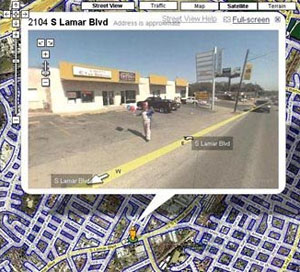
CIA-NSA connected Google has been collecting more than “streetviews” in your neighborhood.
In 2006, Robert David Steele, a 20-year Marine Corps infantry and intelligence officer and a former clandestine services case officer with the CIA, told the Alex Jones Show that the CIA helped bankroll Google at its inception. “I think Google took money from the CIA when it was poor and it was starting up and unfortunately our system right now floods money into spying and other illegal and largely unethical activities, and it doesn’t fund what I call the open source world,” said Steele, citing “trusted individuals” as his sources.
Google is a key intelligence asset. It has supplied the core search technology for Intellipedia, a highly-secured online CIA system and has shared a close relationship with both the CIA, NSA, and government national security officials.
In February, it was reported that Google and the NSA have forged a partnership after Google purportedly suffered a cyberattack in December. “This is not the first time the NSA has been tapped to help a U.S. corporation with cyber security, but the purported partnership would certainly be unique since Google’s servers house such a vast collection of user data including search histories, email, and personal documents,” reports PC World.
“Google’s connection with the CIA and its venture capital firm extends to sharing at least one key member of personnel. In 2004, the Director of Technology Assessment at In-Q-Tel, Rob Painter, moved from his old job directly serving the CIA to become ‘Senior Federal Manager’ at Google.,” writes Eric Sommer.
In-Q-Tel, a venture capital firm established by the CIA, also had a hand in creating the wildly popular social network Facebook. “The second round of funding into Facebook ($US12.7 million) came from venture capital firm Accel Partners. Its manager James Breyer was formerly chairman of the National Venture Capital Association, and served on the board with Gilman Louie, CEO of In-Q-Tel,” writes Matt Greenop.
Thus it should not be shocking that Google executives are holding meetings with U.S. national security officials for undisclosed reasons, according to the Washington Post, itself a prized CIA asset under the venerable Operation Mockingbird media asset program.
Google insists its vacuuming up of WiFi network data as it gathered images for its Streetview program was a mistake, even though information “published Jan. 28 shows that the data collection program was a very deliberate effort to assemble as much information as possible about U.S. residential and business WiFi networks,” according to the press release below.
—
SANTA MONICA, Calif., July 19 /PRNewswire-USNewswire/ — Citing new information about Google’s classified government contracts and the Internet giant’s admitted Wi-Spying activity, Consumer Watchdog today said it is more imperative than ever for the Energy and Commerce Committee to conduct hearings into possible privacy violations by Google.
In a letter to Committee Chairman Henry Waxman and Ranking Member Joe Barton, the nonpartisan, nonprofit public interest group’s John M. Simpson wrote:
“Based on today’s Washington Post, it appears that Google holds classified U.S. government contracts to supply search and geospatial information to the U.S. government. In addition, White House records show that Google executives have been holding meetings with U.S. national security officials for undisclosed reasons. Finally, it also appears that Google’s widely criticized efforts to collect wireless network data on American citizens were not inadvertent, contrary to the company’s claims.”
“As history has repeatedly shown, alliances between the U.S. intelligence community and giant corporations that collect data on American citizens can be a toxic combination where the U.S. Constitution is concerned,” the letter said.
In a June 9 letter to the Energy and Commerce Committee, Google director for public policy Pablo Chavez asserted that Google “mistakenly included code in our software that collected samples of ‘payload data’” from private WiFi networks. But review of a patent application from Google covering the gathering of WiFi data published Jan. 28 shows that the data collection program was a very deliberate effort to assemble as much information as possible about U.S. residential and business WiFi networks.
The letter continued:
“…what the patent does show is that Google’s recent claims about how the Street View program was designed are not accurate, and that the company always intended to collect and store the ‘packets’ of wireless data that contain so-called payload information.
“The patent makes repeated reference to ‘capturing’ packets, including paragraph [0055], which states that the system will enable geolocations so long as the equipment being used ‘is able to capture and properly decode a packet…’
“This raises serious questions about whether Google has engaged in a reckless effort to amass private data without giving any thought to the possible misuse of that information, and whether it can be trusted to safeguard the information it collects from the prying eyes of the U.S. government.”
In addition, White House visitor logs show that Alan Davidson, Google’s Director of Public Policy and Government Affairs, has had at least three meetings with officials of the National Security Council since the beginning of last year. One of the meetings was with White House senior director for Russian affairs Mike McFaul, while another was with Middle East advisor Daniel Shapiro.
It has also been widely reported that Google has been working in “partnership” with the National Security Agency, the very same government body that illegally intercepted the private communications of millions of Americans during the Bush administration.
Consumer Watchdog, formerly the Foundation for Taxpayer and Consumer Rights is a nonprofit, nonpartisan consumer advocacy organization with offices in Washington, DC and Santa Monica, Ca. Consumer Watchdog’s website is www.consumerwatchdog.org. Visit our new Google Privacy and Accountability Project website: http://insidegoogle.com.
Could the NSA's new "Perfect Citizen" actually be used for spying on every citizen in the U.S.?
The name sounds like an action movie -- the heroic vigilante chases down the bad guys to aid his country and prevent a nuclear armageddon. It also sounds like the worst possible name for a government program intended to protect citizens, not spy on them.
The NSA's new cyber-security program Perfect Citizen will monitor nuclear power plants, train stations, and the electric power grid to safeguard against cyber-assaults.
And as the Wall Street Journal reported, the new program is intended to monitor cyber-terrorist threats and "would rely on a set of sensors deployed in computer networks for critical infrastructure that would be triggered by unusual activity suggesting an impending cyber attack."...
Grid-hacking is back in the news, with the unveiling of “Perfect Citizen,” the National Security Agency’s creepily named effort to protect the networks of electrical companies and nuclear power plants.
The fact of the matter is that it isn’t easy to do any of these things. Your average power grid or drinking-water system isn’t analogous to a PC or even to a corporate network. The complexity of such systems, and the use of proprietary operating systems and applications that are not readily available for study by your average hacker, make the development of exploits for any uncovered vulnerabilities much more difficult than using Metasploit.
To start, these systems are rarely connected directly to the public internet. And that makes gaining access to grid-controlling networks a challenge for all but the most dedicated, motivated and skilled — nation-states, in other words.
Let’s pretend for a moment that hackers were planning to attack the United States. What would they need to do to gather enough information necessary to take out the electrical power in key parts of the country? They don’t want to fiddle at the edges, mind you. They want to have enough data to build the technical capability necessary to shut out the lights in Washington or New York or California at precisely the time and for exactly the duration they want.
For starters, they would need to know things like: Where are the power plants? What kind of plants are they? What sort of fuel do they use? Who built them and when? What sort of materials and technology were used when they were built? Who manufactured the generators, turbines and other key equipment? Whose SCADA software are they running? Who runs the plants? How does fuel, people, supplies get into or out of the plant? What sort of security do they have? And perhaps most importantly: Which plants supply power to which parts of the country?
Where to begin? Even in places like the United States, where there isn’t much you cannot find online, you’re not going to be able to get the depth and detail you need to turn off the lights with a simple network connection. You’re going to have to deploy national-level resources:...
The NSA is denying a report from the Wall Street Journal that a secret program code-named “Perfect Citizen” will be monitoring civilian networks.
That’s from a rare public statement by the ultra-secret agency responsible for spying on outsiders and defending classified networks. The NSA, as a wing of the military, is largely prohibited from operating within the U.S.
The Journal reported Wednesday that defense contractor Raytheon won a $100 million contract that would involve sensors in the networks of “critical infrastructure” such as utilities and nuclear power plants. The sensors would report anomalies to the NSA via a partnership with Homeland Security, the Journal reported. According to an e-mail cited in the report, a Raytheon employee described it as a “Big Brother” system.
The federal government is launching an expansive program dubbed "Perfect Citizen" to detect cyber assaults on private companies and government agencies running such critical infrastructure as the electricity grid and nuclear-power plants, according to people familiar with the program.
The surveillance by the National Security Agency, the government's chief eavesdropping agency, would rely on a set of sensors deployed in computer networks for critical infrastructure that would be triggered by unusual activity suggesting an impending cyber attack, though it wouldn't persistently monitor the whole system, these people said.
Defense contractor Raytheon Corp. recently won a classified contract for the initial phase of the surveillance effort valued at up to $100 million, said a person familiar with the project.
An NSA spokeswoman said the agency had no information to provide on the program. A Raytheon spokesman declined to comment.
Some industry and government officials familiar with the program see Perfect Citizen as an intrusion by the NSA into domestic affairs, while others say it is an important program to combat an emerging security threat that only the NSA is equipped to provide...
The Obama administration lifted the veil Tuesday on a highly-secretive set of policies to defend the U.S. from cyber attacks.
It was an open secret that the National Security Agency was bolstering a Homeland Security program to detect and respond to cyber attacks on government systems, but a summary of that program declassified Tuesday provides more details of NSA’s role in a Homeland program known as Einstein.
The current version of the program is widely seen as providing meager protection against attack, but a new version being built will be more robust–largely because it’s rooted in NSA technology. The program is designed to look for indicators of cyber attacks by digging into all Internet communications, including the contents of emails, according to the declassified summary...
SAN FRANCISCO--Homeland Security and the National Security Agency may be taking a closer look at Internet communications in the future.
The Department of Homeland Security's top cybersecurity official told CNET on Wednesday that the department may eventually extend its Einstein technology, which is designed to detect and prevent electronic attacks, to networks operated by the private sector. The technology was created for federal networks...